
From data protocol to enterprise UI.
One stack. Ready to ship.
LaravelUi5 combines a standards-compliant OData v4 data layer, a metadata-driven architecture engine, and the enterprise UX strength of OpenUI5. All native to Laravel.
From your data to a SaaS you operate — in four layers
Laravel is one of the most elegant backend frameworks in the world. OpenUI5 is one of the most mature enterprise UI frameworks in existence. OData v4 is the standard protocol connecting data to any client.
What was missing until now was a system that unifies all three and a clear path from a single app to a SaaS you operate.
OData
Standards-Based Data
Full OData v4 server for Laravel. Point it at your Eloquent models and get a queryable, standards-compliant API. MIT licensed, fully open.
Open SourceCore
Self-Describing Structure
Metadata engine with declarative PHP attributes. Your code describes the system. Routes, navigation, and endpoints generate automatically.
Free RegistrationSDK
Production Runtime
Executes Core's declarations into a full product. Tenant-aware, LeanShell, authentication, authorization. Everything to ship your app, ready with a simple composer require.
CommercialPlatform
Multi-Tenant Operations
When you're ready to run your app for many customers: the operational layer on top of everything the SDK already ships. Many tenants, onboarding, and the craft of running it, taking shape now.
Operator →Complexity grows faster than frameworks change
When Laravel projects succeed, they rarely fail because of the backend. They fail at the API layer and the UI.
Every project re-invents its API
Custom REST endpoints, manual serializers, hand-rolled pagination and filtering. OData v4 eliminates this entire class of problems. One standard, auto-generated, fully queryable.
Frontend frameworks change too fast
Vue 2 → 3 → Next. React → Hooks → Server Components. OpenUI5 has been enterprise-stable for over a decade.
Every project re-invents the UI
Inconsistent design, no governance, high maintenance cost. A consistent component library can change this, if backed by a real design system.
Backend and UI don't speak the same language
Two data models, duplicate validation, loose coupling. OData gives both sides a shared protocol. Core gives both sides a shared structure.
SaaS grows, but the UI doesn't scale
What starts small and elegant becomes large and chaotic. Self-contained modules with metadata-driven wiring solve this at the architectural level.
Four pillars, one architecture
OData v4 Data Layer
Your Eloquent models, speaking a universal protocol.
Automatic entity data model generation. Full query support — $filter, $expand, $select, $orderby, pagination. Standards-compliant with any OData client. Read-only by design: writes stay in your application. No custom API code. No serializers. No boilerplate.
Core Metadata Engine
Code that describes itself.
Actions, reports, apps, semantic objects, all described in PHP attributes and automatically registered. Routes generate. Navigation builds. Your code IS the source of truth. No YAML. No setup.
Self-Contained Modules
Enterprise modularity native to Laravel.
Every feature module is a complete package: UI5 app, navigation, actions, reports, OData endpoints, settings, permissions. Install a module and everything registers automatically.
Enterprise UX with OpenUI5
Without a platform contract.
Object pages, tables, filter bars, wizards, dynamic forms, responsive layouts. All clear, elegant, and professional. Your Laravel apps look and feel like real enterprise products.

From CRUD to real business applications
LaravelUi5 goes far beyond the typical "CRUD + UI framework" approach. It enables modular, long-lived business applications that small teams can actually ship.
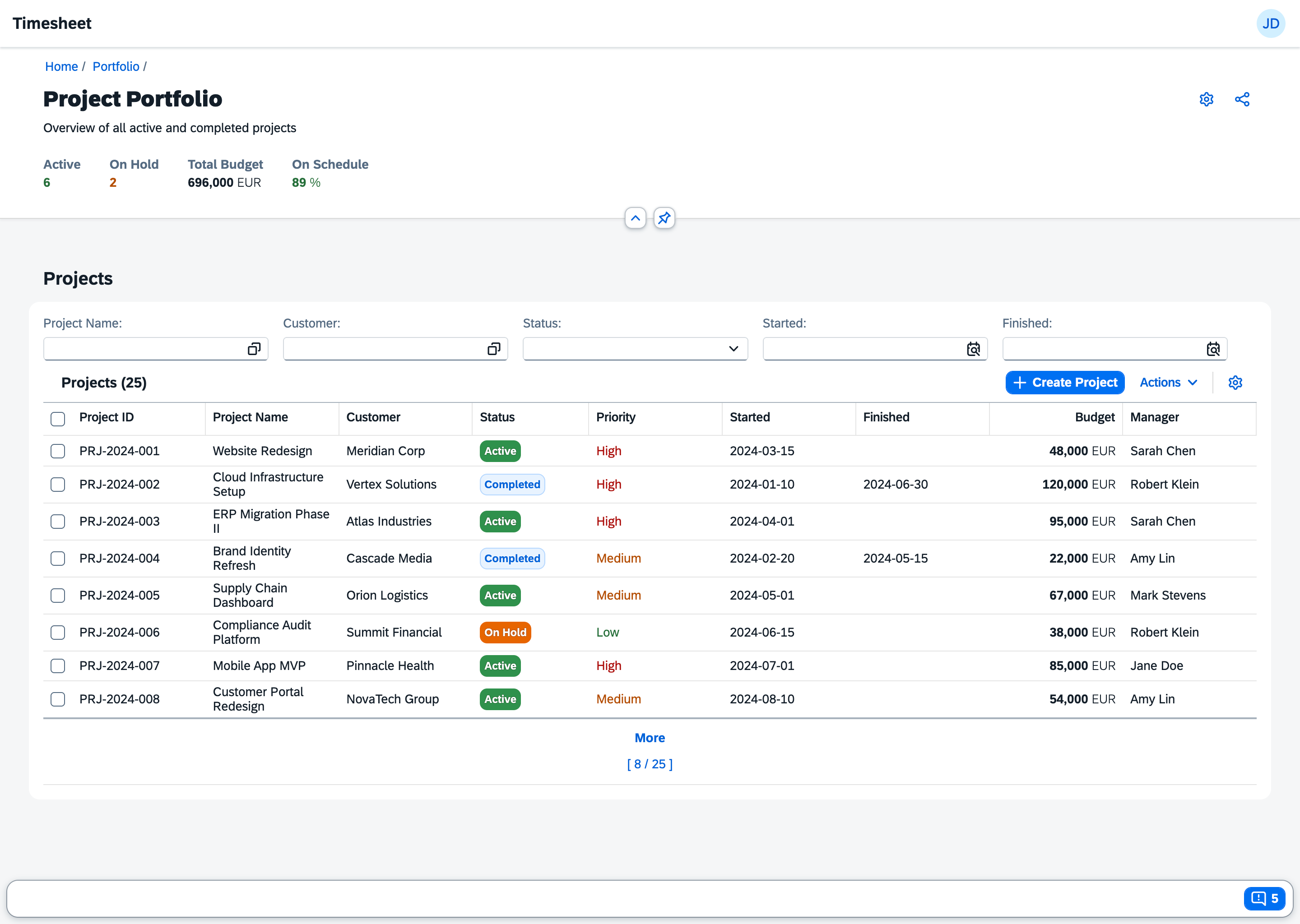
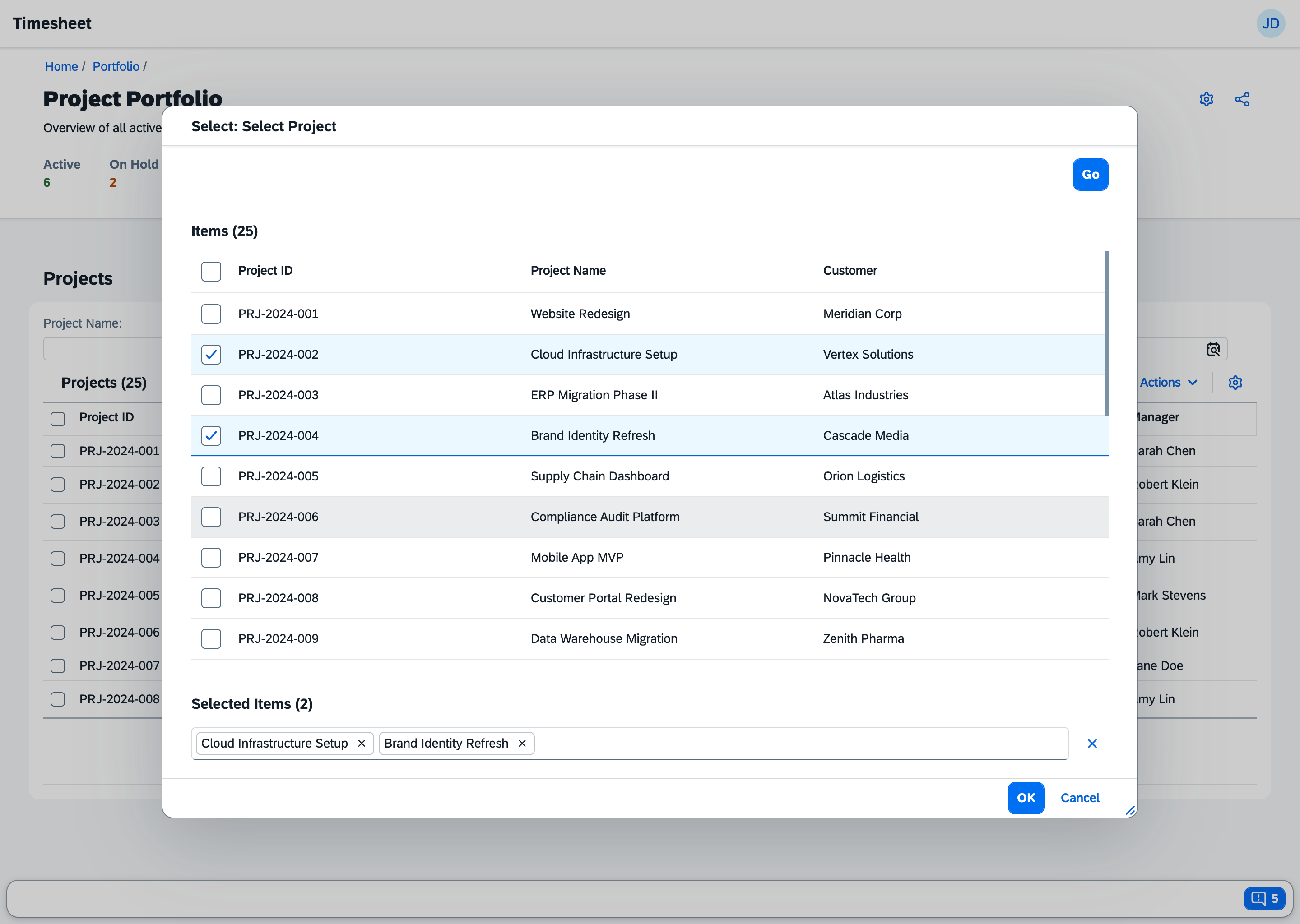
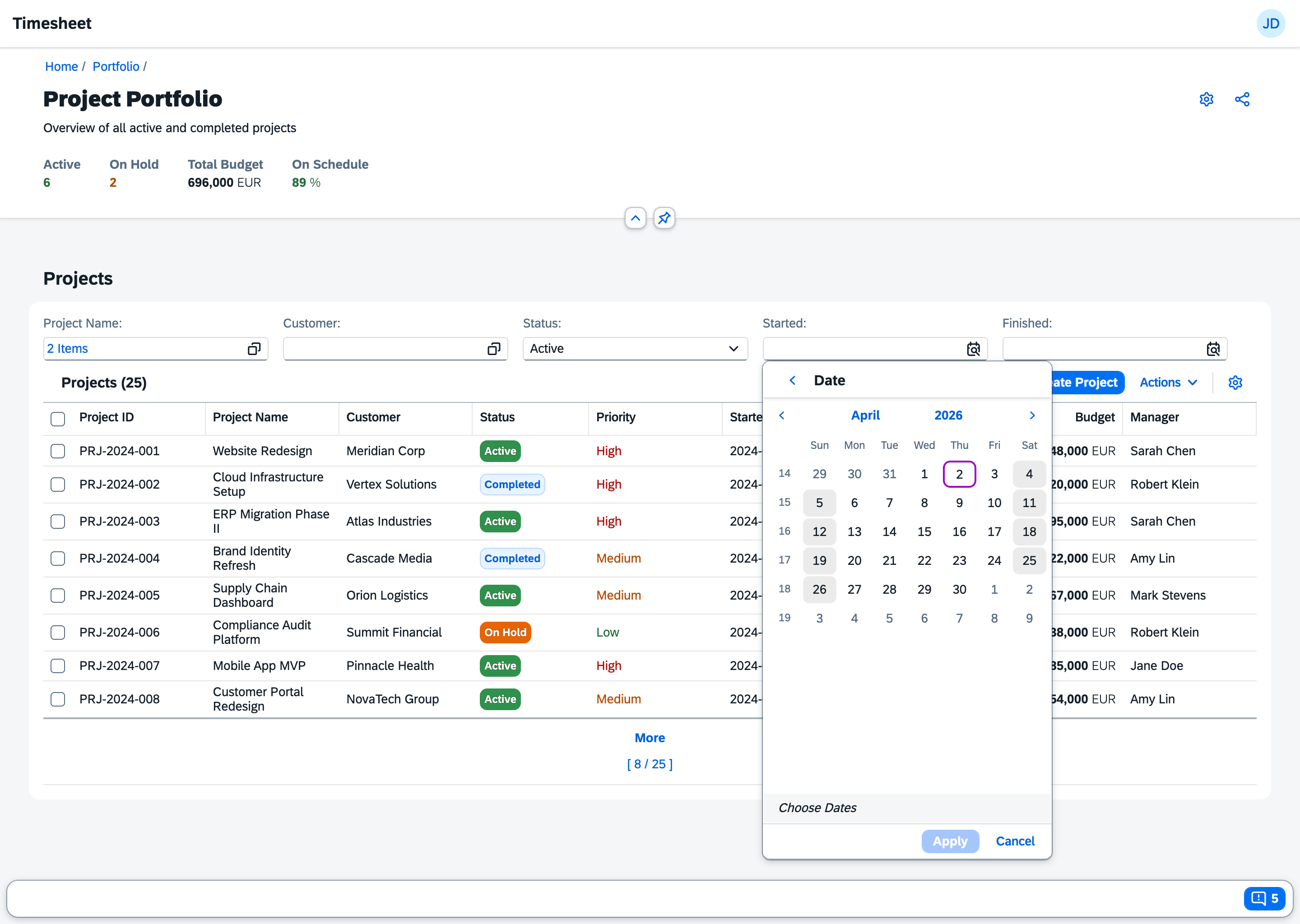
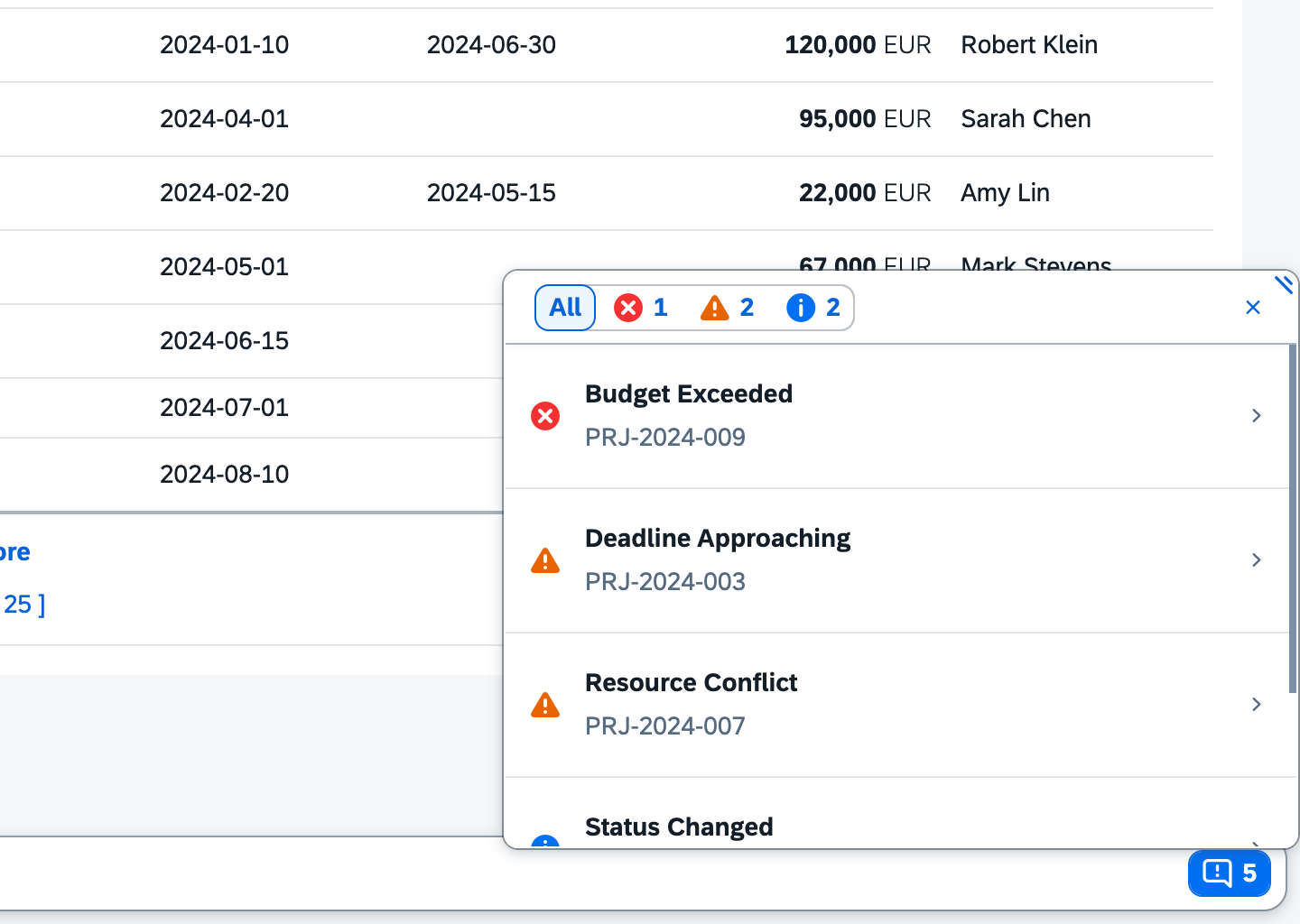
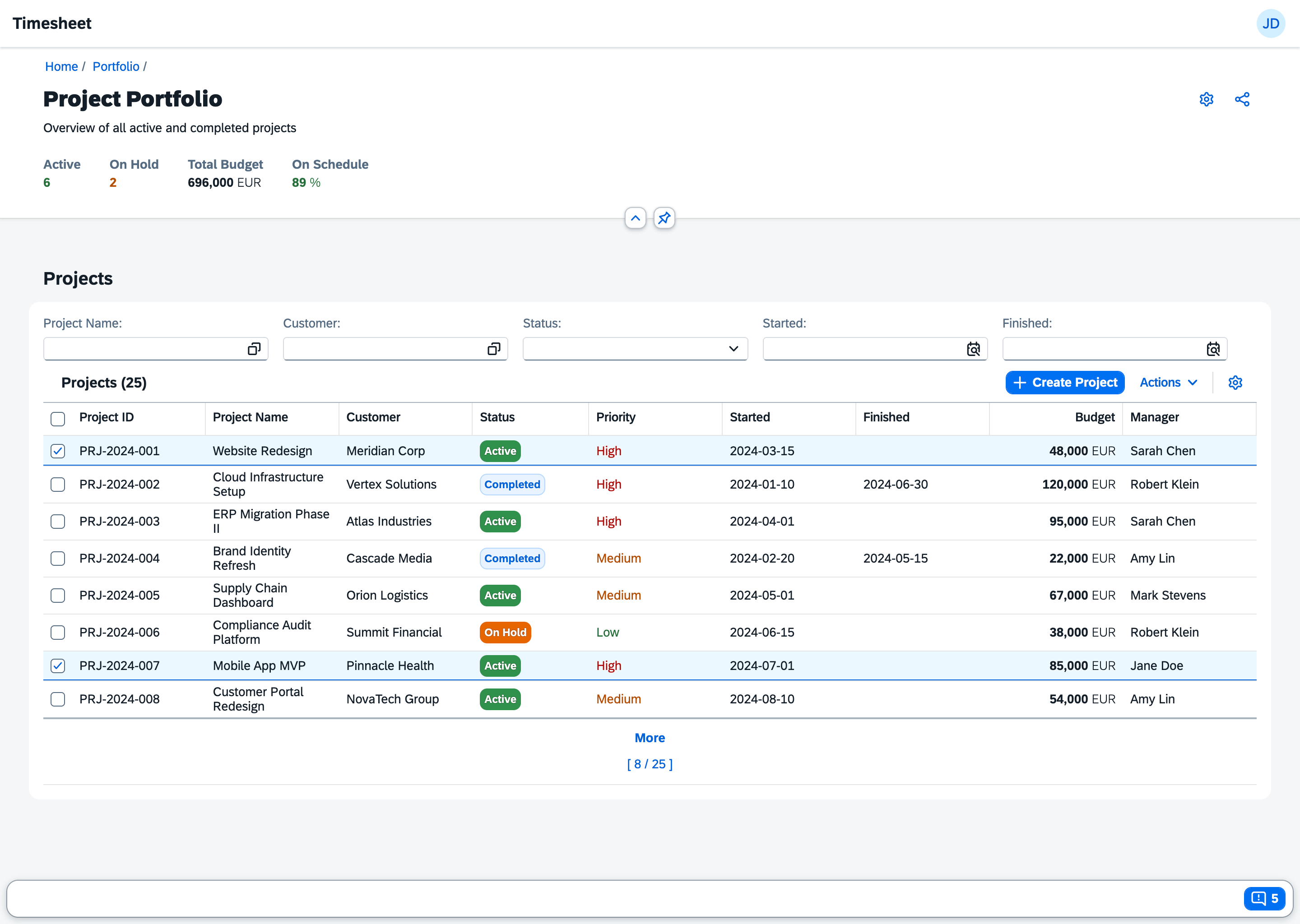
This is not a custom component library. You build on a mature, enterprise-grade ecosystem.
A system built for teams
Developers
"I don't want to rebuild the same API layer for every project."
- OData v4 from your Eloquent models in minutes
- Clean architecture without frontend baggage
- Professional enterprise UI out of the box
CTOs & Tech Leads
"We need structure, governance, and longevity."
- Roles and abilities with module governance
- Coding agents that follow the stack's rules, not their guesses
- No framework churn. Standards I can bet the roadmap on
Agencies
"Reusable modules = profitable projects."
- Reusable building blocks across client projects
- Consistent UX without re-design per project
- Less maintenance, more value delivered
From an empty folder to a running dashboard in under nine minutes
Nine episodes, fifty-six minutes. You publish an OData v4 service with a real $metadata document, browse a thousand records with server-side search, and write to the database through a named business operation. No Node. No build step. Seven lines of JavaScript.
An architecture that grows with your product
LaravelUi5 is built on a clear layered model. Each layer has a boundary and a responsibility. The result is a system that remains stable, even after years.
A growing ecosystem
OData public release v3.0.6
Read-only OData v4 server for Laravel. Open source and ready to use.
ShippedCore v2.11.0
Metadata engine, artifact registry, and declarative PHP attributes. Free to use; installing needs a free account.
ShippedSDK v1.2.0
Multi-tenancy, LeanShell, and the full runtime for production SaaS. See the Roadmap for current status.
ShippedMonthly office hour
Ask questions, see demos, and connect with the team. First Tuesday of the month, 7 pm CEST, open end. Create a free account to get your invite. Or book a personal 15-min intro.
OpenPartner program
Build on LaravelUi5, deliver to your clients, grow with the ecosystem.
FormingFollow new releases on GitHub — OData, Core, SDK. Hit Watch → Releases on any repo to get notified.
Ready to start?
OData is open source. Reading the docs is free. Installing Core needs a free account. Start with what you need. Grow from there.